Multi-turn attacks broke AI models 88% of the time
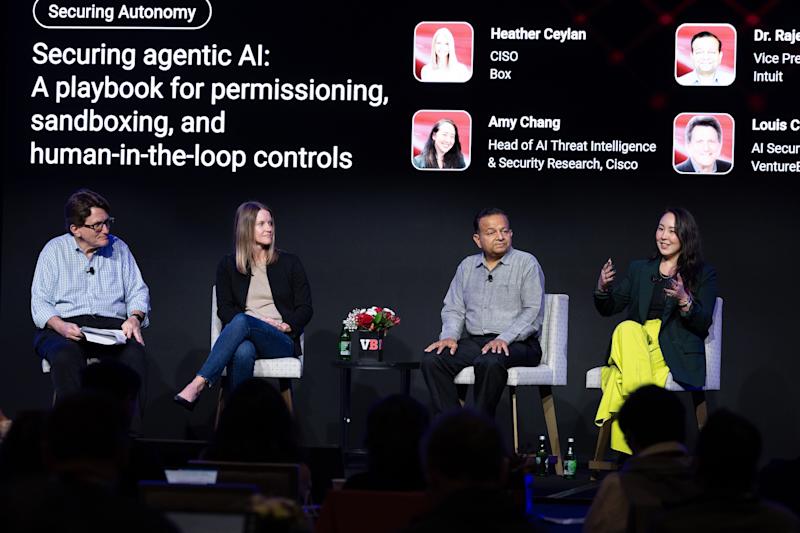
When Cisco ran 6,986 multi-turn attacks against 15 flagship models, attackers who adapted across the conversation broke through as often as 88.3% of the time. Amy Chang, Cisco's head of AI threat intelligence and security research, brought that finding to the agentic security panel at VB Transform 2026; the number should worry anyone still running single-turn red-teaming programs.
Why single-turn testing is not enough
VentureBeat's June 2026 Pulse survey of 107 enterprise respondents explains why the room was full. More than half, 54%, have already had a confirmed agent security incident (18%) or a near-miss caught before harm (36%). Just 32% give every agent its own scoped, managed identity, and fewer still, 30%, isolate their highest-risk agents in sandboxes. Provider-native and hyperscaler controls remain the primary agent security layer at 82% of companies surveyed.
The survey highlights the need for more comprehensive security measures. With the increasing prevalence of AI models, it's essential to ensure that they are secure and reliable. Single-turn testing may not be enough to identify potential vulnerabilities, and multi-turn attacks can be devastating.
The consequences of a security breach can be severe, including financial losses, damage to reputation, and compromised user data. Therefore, it's crucial to prioritize AI security and invest in robust testing and validation processes.
The world's largest security vendors are taking action
The world's largest security vendors have done the same math. Palo Alto Networks closed its $25 billion acquisition of CyberArk in February, CrowdStrike agreed in January to pay $740 million for SGNL, and Cisco announced its intent to acquire Astrix Security for a reported $400 million, all of it aimed at the identity and isolation layer most enterprises lack.
These acquisitions demonstrate the growing recognition of the importance of AI security. By investing in identity and isolation, companies can better protect their AI models and prevent potential breaches.
As the use of AI models continues to expand, it's essential to stay ahead of potential threats. The security vendors' actions are a step in the right direction, but more needs to be done to ensure the security and reliability of AI models.
The limitations of single-turn testing
Single-turn testing is a common method used to evaluate the security of AI models. However, it has several limitations. It only tests the model's response to a single input or question, which may not be representative of real-world scenarios.
Multi-turn attacks, on the other hand, simulate real-world conversations, where attackers adapt and evolve their tactics across multiple turns. This type of testing is more comprehensive and can help identify potential vulnerabilities that single-turn testing may miss.
The limitations of single-turn testing are well-documented. It's essential to move beyond this method and adopt more robust testing and validation processes that can identify potential threats and vulnerabilities.
What can be done to improve AI security?
To improve AI security, companies must prioritize testing and validation. This includes moving beyond single-turn testing and adopting more comprehensive methods, such as multi-turn attacks.
Additionally, companies should invest in identity and isolation, as seen in the recent acquisitions by security vendors. This will help protect AI models from potential breaches and ensure their security and reliability.
Finally, companies should stay up-to-date with the latest developments in AI security and participate in industry discussions and forums. This will help identify potential threats and vulnerabilities and ensure that AI models are secure and reliable.
By taking these steps, companies can improve AI security and prevent potential breaches. The consequences of a security breach can be severe, and it's essential to prioritize AI security to protect users and prevent financial losses.
The future of AI security
The future of AI security is uncertain, but one thing is clear: it's essential to prioritize security and reliability. As AI models become increasingly prevalent in our lives, it's crucial to ensure that they are secure and reliable.
The recent acquisitions by security vendors demonstrate the growing recognition of the importance of AI security. However, more needs to be done to ensure the security and reliability of AI models.
As the use of AI models continues to expand, it's essential to stay ahead of potential threats. By prioritizing AI security and investing in robust testing and validation processes, companies can prevent potential breaches and ensure the security and reliability of AI models.
At Pitchbar, we're committed to providing the latest news and insights on AI and security. Stay up-to-date with the latest developments and join the conversation on the importance of AI security.
Attribution: This article is based on the original report by VentureBeat and is used with permission.
Originally reported by venturebeat.com. Read the original article.