Uh-oh: Some Claude shared conversations and Artifacts appear to be indexed and publicly accessible on Google Search
Google has indexed and made publicly accessible some shared conversations and Artifacts from the AI chatbot Claude, raising concerns about data privacy and security.
The issue was first reported by researcher and developer, Jane Manchun Wong, who discovered that some Claude conversations and Artifacts were being indexed by Google's search engine.
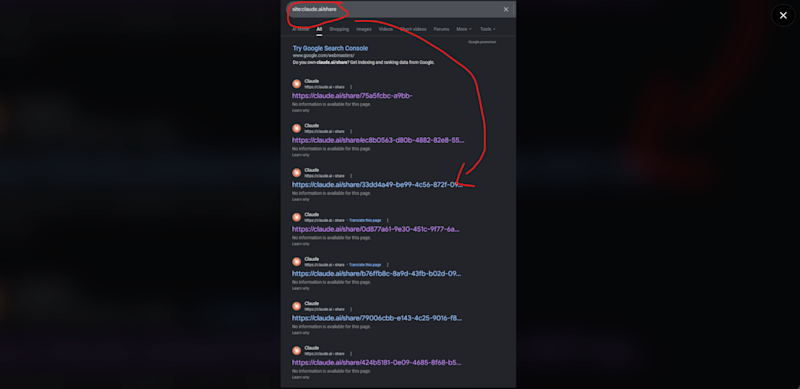
Wong shared a screenshot of the indexed conversations on Twitter, which showed that Google had crawled and stored the data, making it searchable by the public.
What are Claude conversations and Artifacts?
Claude is an AI chatbot developed by Anthropic, a company that focuses on creating large language models for various applications.
Claude conversations refer to the interactions between the chatbot and its users, while Artifacts are the outputs generated by the chatbot, such as text, images, or other creative content.
The conversations and Artifacts are typically stored on the user's device or on the cloud, and are intended to be private and secure.
How did Google index the conversations and Artifacts?
It is unclear how Google indexed the conversations and Artifacts, but it is possible that they were shared publicly by the users or were crawled by Google's search engine through other means.
Google's indexing process involves crawling the web for new content, which can include user-generated data, such as social media posts, blog comments, and other online interactions.
However, in this case, the indexed conversations and Artifacts appear to be from private interactions between users and the Claude chatbot, raising concerns about data privacy and security.
What are the implications of this issue?
The indexing of Claude conversations and Artifacts by Google raises several concerns about data privacy and security.
Firstly, it highlights the potential risks of sharing personal data online, even if it is intended to be private.
Secondly, it raises questions about the security of AI chatbots and the data they collect, particularly if they are not designed with robust security measures in place.
Lastly, it highlights the need for users to be more mindful of their online interactions and to take steps to protect their personal data.
What can users do to protect their data?
Users can take several steps to protect their data from being indexed by Google:
Firstly, they should be cautious when sharing personal data online, including conversations and Artifacts from AI chatbots.
Secondly, they should check their Google account settings to ensure that their data is not being shared publicly.
Thirdly, they should consider using private browsers or search engines that do not collect user data.
What can developers do to improve data security?
Developers can take several steps to improve data security for AI chatbots:
Firstly, they should implement robust security measures, such as encryption and access controls, to protect user data.
Secondly, they should ensure that users are informed about how their data will be used and shared.
Thirdly, they should provide users with options to control their data, such as deleting or exporting it.
Lastly, they should regularly review and update their security protocols to ensure that they are effective in protecting user data.
Conclusion
The indexing of Claude conversations and Artifacts by Google raises several concerns about data privacy and security.
Users should be cautious when sharing personal data online and take steps to protect their data from being indexed by Google.
Developers should implement robust security measures to protect user data and ensure that users are informed about how their data will be used and shared.
By taking these steps, we can improve data security and protect user privacy in the online world.
Attribution: This article is based on a report by Jane Manchun Wong and an article by VentureBeat.
Originally reported by venturebeat.com. Read the original article.