Mastercard's Fraud System Fails as Bots Become the Thieves
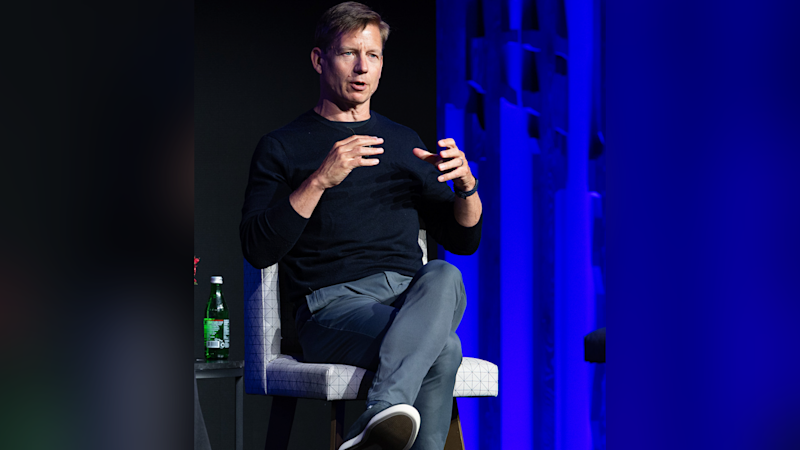
Every time a Mastercard gets tapped, the network has less than a tenth of a second to judge how likely the purchase is to be fraudulent. It made that call across 175 billion transactions last year. Now the buyer on the other side of that judgment is starting to change, and Greg Ulrich, the company's chief AI and data officer, spelled out the consequence for the VB Transform 2026 audience in Menlo Park on July 14.
'We've built a bunch of risk rules over time that were intended to stop a bot from transacting,' Ulrich said. 'Now we need to enable the bot to transact, so that requires a change to our risk framework and our risk rules.'
Ulrich joined Mastercard eleven years ago when an analytics company he worked at was acquired, and said trust struck him from day one on the job.
'It's what enables a merchant that's never met you to accept payment and ensure that they're going to get paid. It's what enables you as a consumer to transact and ensure that things are going to work out in a trusted, secure way. And if something goes wrong, there's a safe and secure path for a dispute and to resolve this,' he said.
175 billion transactions, scored in under 100 milliseconds
He took the audience through the process of how Mastercard's fraud system works, explaining that it uses a combination of machine learning algorithms and human oversight to detect suspicious transactions.
'We've got a bunch of risk rules that are based on machine learning, and we've also got a bunch of risk rules that are based on human judgment,' Ulrich said. 'And we've got a bunch of risk rules that are based on a combination of both.'
The Shift in Bot Behavior
As bots become more sophisticated, they are no longer just simple scripts designed to automate repetitive tasks. They are now capable of complex decision-making and can even learn from their experiences.
'We're seeing bots that are capable of complex decision-making, and they're able to learn from their experiences,' Ulrich said. 'They're able to adapt to new situations and change their behavior accordingly.'
This shift in bot behavior has significant implications for Mastercard's fraud system. The company's risk rules, which were designed to stop simple bots from transacting, are no longer effective against more sophisticated bots.
'We need to enable the bot to transact, so that requires a change to our risk framework and our risk rules,' Ulrich said. 'And that's a big change for us, because we've built a bunch of risk rules over time that were intended to stop a bot from transacting.'
The Consequences of Failing to Adapt
As Mastercard's fraud system struggles to keep up with the changing behavior of bots, the company is facing a new challenge: enabling bots to transact while still maintaining the security and trust of its customers.
'We're facing a new challenge, which is enabling bots to transact while still maintaining the security and trust of our customers,' Ulrich said. 'It's a big change for us, because we've built a bunch of risk rules over time that were intended to stop a bot from transacting.'
The consequences of failing to adapt to this new challenge could be severe. If Mastercard's fraud system is unable to keep up with the changing behavior of bots, the company may be vulnerable to increased levels of fraud and security breaches.
'If we don't adapt to this new challenge, we may be vulnerable to increased levels of fraud and security breaches,' Ulrich said. 'And that would be a big problem for us and for our customers.'
The Path Forward
So what's the path forward for Mastercard? The company must rethink its risk framework and rules to ensure that its fraud system can keep up with the changing behavior of bots.
'We need to rethink our risk framework and rules to ensure that our fraud system can keep up with the changing behavior of bots,' Ulrich said. 'It's a big change for us, but it's necessary to maintain the trust of our customers and ensure the security of our transactions.'
Only by embracing this change can Mastercard maintain the trust of its customers and ensure the security of its transactions.
Attribution: This article is based on a presentation by Greg Ulrich, chief AI and data officer at Mastercard, at the VB Transform 2026 conference in Menlo Park on July 14.
Originally reported by venturebeat.com. Read the original article.