AI Coding Agents Are Revolutionizing Development Teams
Artificial intelligence (AI) is changing the way development teams work. With AI coding agents, engineers can automate repetitive tasks, focus on high-level design, and improve code quality. However, this shift is also raising new questions about safety, support, and cost.
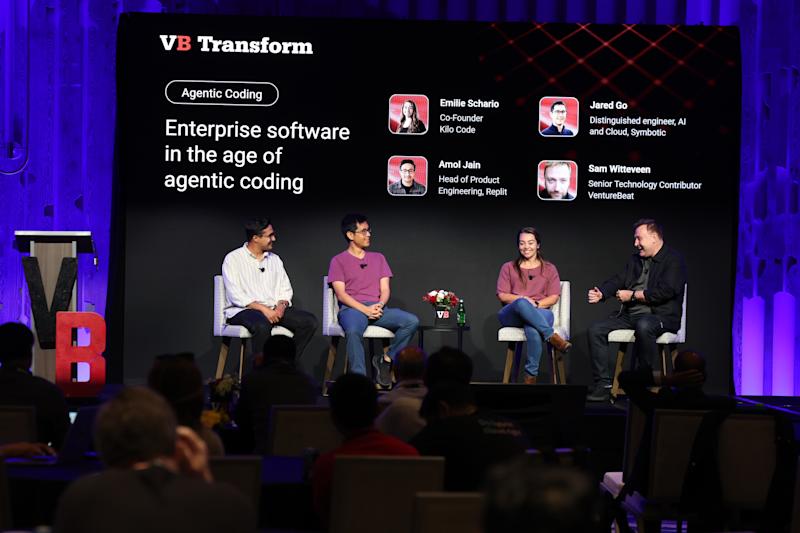
At Kilo Code, engineers are reading or writing code themselves only about 1% of the time now, according to co-founder Emilie Schario. The rest is handled by agents. This shift is forcing new questions onto dev teams: which systems are safe to hand over, who cleans up when models goof up, how to support multi-model architectures, and whether skyrocketing token bills mean real progress or just burned IT budget.
The Benefits of Agentic AI
For tech leads from Replit, Kilo Code, and Symbotic, agentic AI is a welcome evolution. 'Unless something's really broken or debugging, 99% of the time engineers are not reading or writing code anymore,' Emilie Schario said at VB Transform 2026. AI is good at greenfield development, but struggles with brownfield development.
Jared Go, distinguished engineer for AI and cloud at warehouse automation company Symbotic, has a different approach. 'These are my criteria,' he said. 'Let's look at it from the lens of security, elegance, clean, concise code, water tightness.' That way, AI does most of the heavy lifting, and human code review isn't as critical.
The Challenges of Relying on AI
While agentic AI offers many benefits, it also raises new challenges. Human involvement is still necessary, especially when it comes to complex tasks or debugging. Moreover, the cost of relying on AI coding agents can be steep, with skyrocketing token bills and the need for specialized expertise.
However, the benefits of agentic AI far outweigh the costs. By automating repetitive tasks and focusing on high-level design, development teams can improve code quality, reduce errors, and increase productivity. As AI continues to evolve, it's likely that we'll see even more innovative applications of agentic AI in the development world.
Managing the Cost of Agentic AI
One of the biggest challenges of relying on AI coding agents is managing the cost. As AI models become more sophisticated, the cost of training and deploying them can be steep. This is particularly true for large-scale AI models that require significant computational resources.
To mitigate this cost, some companies are turning to cloud-based AI services that offer pay-as-you-go pricing models. This allows companies to only pay for the AI services they use, rather than having to purchase and maintain their own AI infrastructure.
The Role of Human Involvement in Agentic AI
While AI coding agents can automate many tasks, human involvement is still necessary for complex tasks or debugging. This is particularly true for tasks that require domain-specific knowledge or creativity.
To address this challenge, some companies are developing tools that allow humans to collaborate with AI agents in real-time. This enables humans to provide input and guidance to AI agents, while also allowing AI agents to provide suggestions and recommendations.
The Future of Agentic AI
As AI continues to evolve, it's likely that we'll see even more innovative applications of agentic AI in the development world. One area of focus is on developing more transparent and explainable AI models that can provide insights into their decision-making processes.
Another area of focus is on developing AI models that can learn from human feedback and adapt to changing requirements. This will enable AI agents to become even more effective and efficient, while also reducing the need for human involvement.
Conclusion
In conclusion, AI coding agents are revolutionizing development teams, but at what cost? As we continue to explore the benefits and challenges of relying on AI for coding, it's clear that the future of development is bright. With the right approach and the right tools, development teams can harness the power of agentic AI to create better, faster, and more efficient code.
Attribution: This article is based on an interview with Emilie Schario, co-founder of Kilo Code, and Jared Go, distinguished engineer for AI and cloud at Symbotic, as well as other sources from the development community.