Asana's AI Agents Share Memory Across Your Company — But Not Your Secrets
Enterprise teams building AI agents keep hitting the same wall: a chatbot that can answer a prompt but can't remember what the last five people asked it, and can't tell you whether last month's version actually worked.
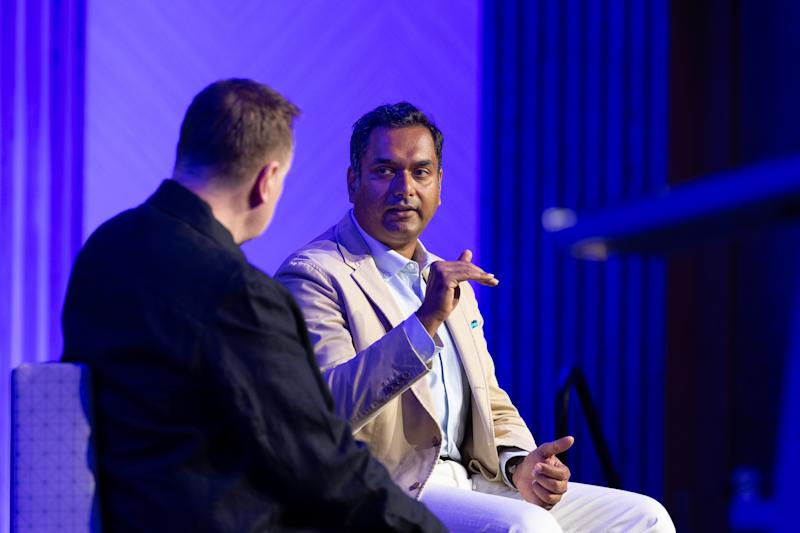
In a fireside chat with VentureBeat's Sam Witteveen at VB Transform 2026, Asana's chief product officer, Arnab Bose, unpacked how his team tackled this problem to build a new operating system: Agentic Work Management (AWM). The product treats AI agents as coachable teammates that operate alongside humans rather than as one-to-one assistants.
The Work Graph: 18 Years of Company Data, Repurposed
To build an operating system for human-agent teams, Asana needed a ready-made enterprise context graph. They built AWM on top of their 18-year-old architecture: the Work Graph.
This graph-based database organizes information through a structure the company calls the Pyramid of Clarity. The smallest unit of work is a task with an assignee, and the Work Graph is designed to capture the relationships between tasks, projects, and teams.
Blueprint for Solving Real-World Bottlenecks
Bose provided a look under the hood of how Asana engineered AWM, offering a blueprint for solving real-world bottlenecks and building agentic systems at scale.
Asana's approach to building AWM is centered around the idea of treating AI agents as coachable teammates that operate alongside humans. This approach allows AI agents to learn from humans and adapt to changing circumstances, rather than simply following a set of pre-defined rules.
The Work Graph is a key component of AWM, providing a structured way to organize and access company data. By leveraging the Work Graph, AI agents can access relevant information and make decisions based on that data.
Asana's experience with building AWM provides valuable insights for product builders and developers looking to move beyond basic integrations. By treating AI agents as coachable teammates, organizations can unlock the full potential of their AI systems and create more effective human-agent teams.
In the end, Asana's AI agents share memory across your company, but keep your secrets safe. This is a powerful combination that can help organizations achieve their goals and stay ahead of the competition.
Breaking Down the Barriers to Human-Agent Collaboration
One of the biggest challenges in building AI agents is breaking down the barriers to human-agent collaboration. Asana's AWM is designed to overcome these barriers by providing a seamless and intuitive way for humans and AI agents to work together.
By treating AI agents as coachable teammates, organizations can create a more collaborative and productive work environment. This approach also enables AI agents to learn from humans and adapt to changing circumstances, making them more effective and efficient.
Asana's AWM is a powerful tool for organizations looking to unlock the full potential of their AI systems. By providing a structured way to organize and access company data, AWM enables AI agents to make decisions based on relevant information and adapt to changing circumstances.
Asana's experience with building AWM provides valuable insights for product builders and developers looking to move beyond basic integrations. By treating AI agents as coachable teammates, organizations can create more effective human-agent teams and achieve their goals.
The Future of Work: Human-Agent Collaboration
The future of work is likely to be shaped by the increasing use of AI agents in the workplace. Asana's AWM is a powerful tool for organizations looking to unlock the full potential of their AI systems and create more effective human-agent teams.
By treating AI agents as coachable teammates, organizations can create a more collaborative and productive work environment. This approach also enables AI agents to learn from humans and adapt to changing circumstances, making them more effective and efficient.
Asana's AWM is designed to provide a seamless and intuitive way for humans and AI agents to work together. By leveraging the Work Graph, AI agents can access relevant information and make decisions based on that data.
Asana's experience with building AWM provides valuable insights for product builders and developers looking to move beyond basic integrations. By treating AI agents as coachable teammates, organizations can create more effective human-agent teams and achieve their goals.
Conclusion
In conclusion, Asana's AWM is a powerful tool for organizations looking to unlock the full potential of their AI systems and create more effective human-agent teams. By treating AI agents as coachable teammates, organizations can create a more collaborative and productive work environment.
Asana's experience with building AWM provides valuable insights for product builders and developers looking to move beyond basic integrations. By leveraging the Work Graph, AI agents can access relevant information and make decisions based on that data.
Asana's AI agents share memory across your company, but keep your secrets safe. This is a powerful combination that can help organizations achieve their goals and stay ahead of the competition.
Attribution: This article is based on a fireside chat with Asana's chief product officer, Arnab Bose, at VB Transform 2026.
Originally reported by venturebeat.com. Read the original article.