Introduction to Vibe Coding
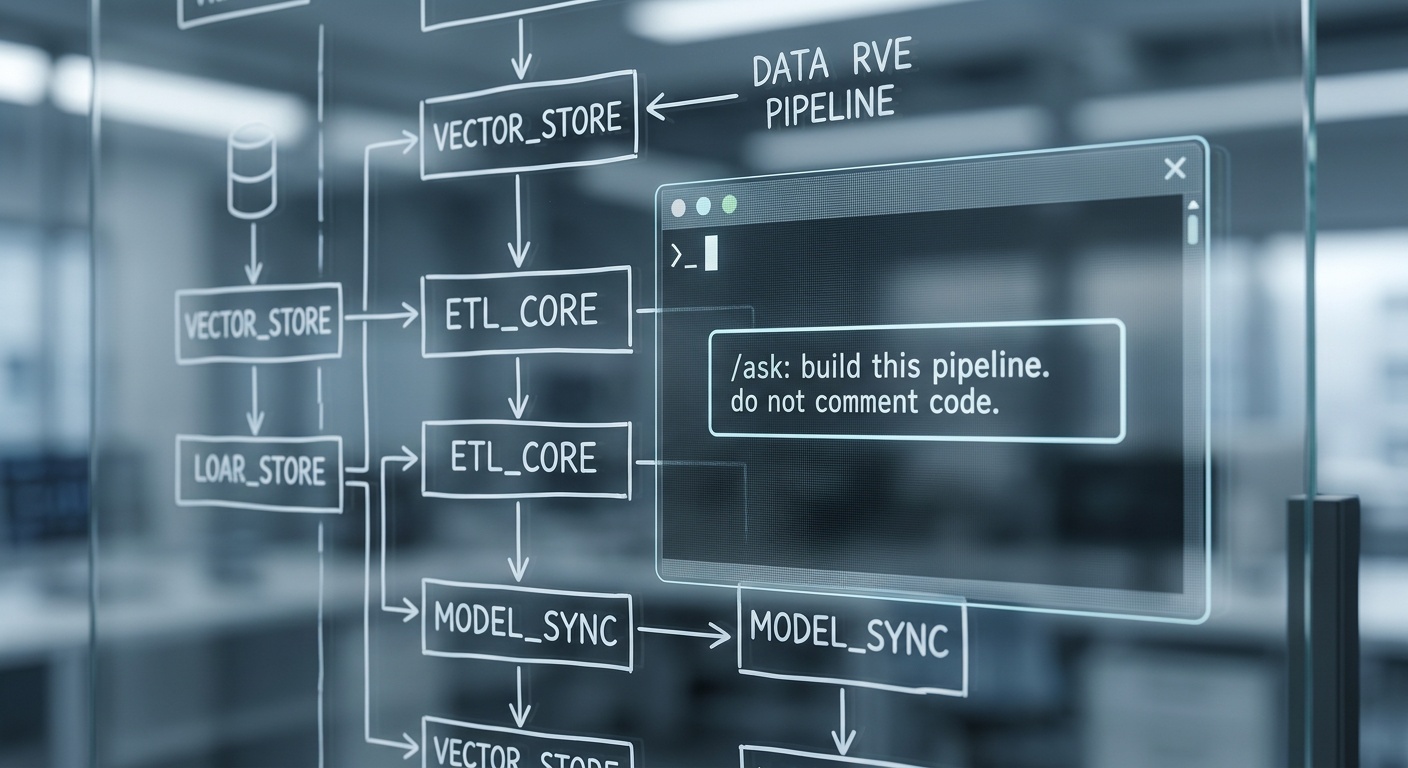
Vibe coding is a rapidly growing field that involves using AI coding agents to generate transformations, pipelines, orchestration workflows, validation tests, and infrastructure configurations from prompts.
This technology has the potential to significantly accelerate data engineering by automating many of the tedious and time-consuming tasks associated with building and maintaining data pipelines.
One of the key benefits of vibe coding is its ability to quickly generate high-quality code, which can save organizations a significant amount of time and resources.
Additionally, vibe coding can help to reduce the risk of human error, as the generated code is based on predefined prompts and rules, rather than manual coding.
The Limitations of Vibe Coding
However, despite its many benefits, vibe coding has one significant limitation: it cannot explain the pipelines it builds six months later.
This is because the operational context, architectural decisions, and business knowledge that go into building a pipeline are scattered across prompts, conversations, generated code, and disconnected workflows, rather than becoming part of the system itself.
This limitation can make it difficult for organizations to understand and maintain their pipelines over time, which can lead to a range of problems, including errors, downtime, and security vulnerabilities.
Furthermore, the lack of transparency and explainability in vibe coding can also make it challenging for organizations to comply with regulatory requirements and industry standards.
The Rise of Spec-Driven Development
Spec-driven development (SDD) is emerging as one approach to address the limitations of vibe coding.
In SDD, prompts, business rules, validation logic, orchestration behavior, and implementation workflows are converted into executable and versioned specifications that become part of the system itself.
These specifications act as persistent operational memory for both humans and AI agents, allowing them to understand the context and decisions that went into building a pipeline.
SDD also enables organizations to create a single source of truth for their pipelines, which can help to reduce errors and inconsistencies, and improve collaboration between teams.
Benefits of Spec-Driven Development
The benefits of SDD are numerous, including:
- Improved pipeline explainability: With SDD, the specifications that go into building a pipeline are preserved and can be used to explain the pipeline six months later.
- Increased collaboration: SDD allows multiple teams to work together on a pipeline, with each team contributing to the specifications and understanding the context and decisions that went into building the pipeline.
- Reduced errors: By converting prompts and business rules into executable specifications, SDD reduces the likelihood of errors and inconsistencies in the pipeline.
- Improved compliance: SDD can help organizations to comply with regulatory requirements and industry standards by providing a clear and transparent record of pipeline development and maintenance.
In addition to these benefits, SDD can also help organizations to improve their overall data engineering capabilities, by providing a framework for building and maintaining high-quality pipelines.
This can lead to a range of benefits, including improved data quality, increased efficiency, and reduced costs.
Implementing Spec-Driven Development
Implementing SDD requires a number of key steps, including:
- Defining the scope and requirements of the pipeline: This involves identifying the business needs and technical requirements of the pipeline, and defining the specifications that will be used to build it.
- Creating executable specifications: This involves converting the specifications into executable code, using a range of tools and technologies, such as domain-specific languages (DSLs) and model-driven engineering (MDE) techniques.
- Integrating with existing tools and systems: This involves integrating the SDD approach with existing tools and systems, such as version control systems, continuous integration/continuous deployment (CI/CD) pipelines, and monitoring and logging tools.
By following these steps, organizations can implement SDD and start to realize the benefits of improved pipeline explainability, increased collaboration, and reduced errors.
Conclusion
In conclusion, while vibe coding has the potential to significantly accelerate data engineering, it has one significant limitation: it cannot explain the pipelines it builds six months later.
Spec-driven development emerges as a solution to this problem, by converting prompts and business rules into executable and versioned specifications that become part of the system itself.
By adopting SDD, organizations can improve pipeline explainability, increase collaboration, and reduce errors, ultimately leading to more efficient and effective data engineering.
Additionally, SDD can help organizations to improve their overall data engineering capabilities, by providing a framework for building and maintaining high-quality pipelines.
As the field of data engineering continues to evolve, it is likely that SDD will play an increasingly important role in helping organizations to build and maintain complex data pipelines.
Attribution: This article was written by the Pitchbar tech news editor, based on an article from venturebeat.com.