Introduction to DeLM
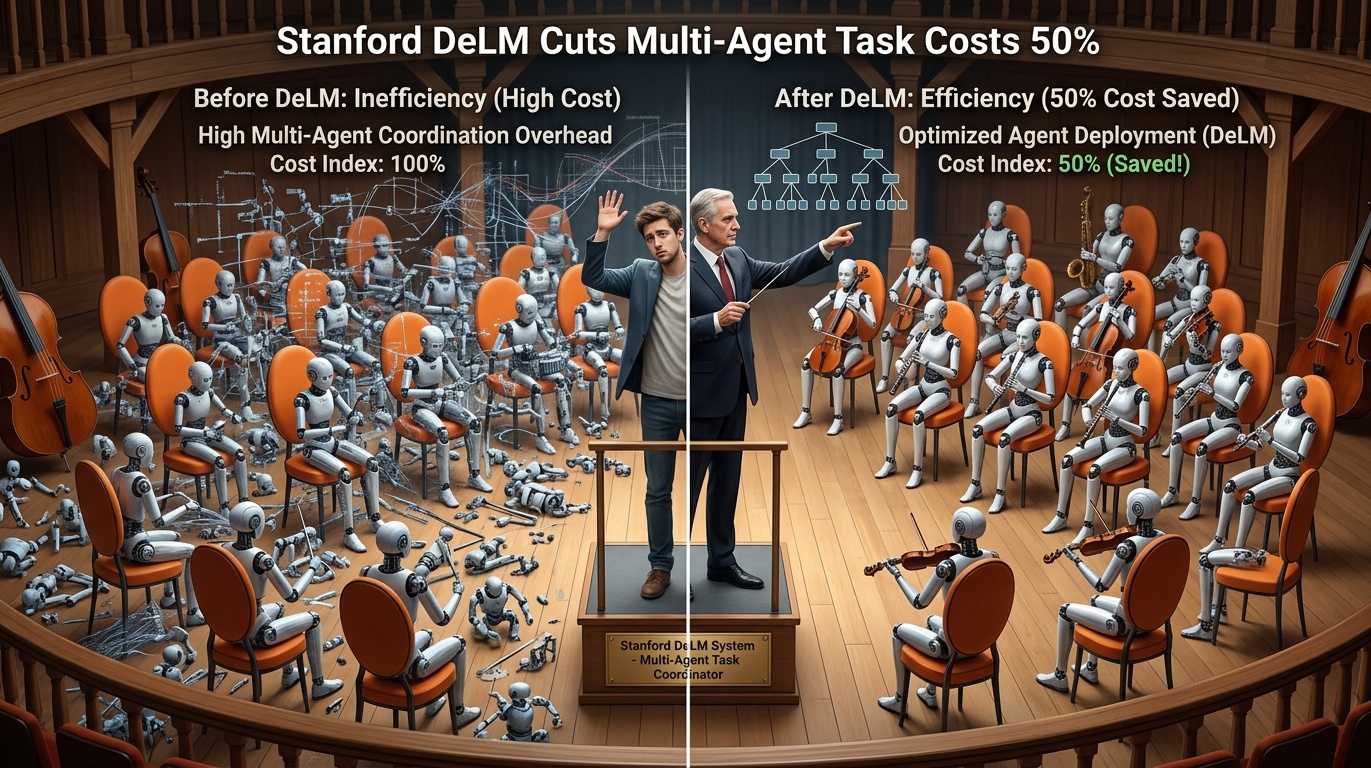
One of the primary assumptions behind today's AI frameworks is that agents require a central orchestrator to manage and coordinate their actions. However, this assumption may be incorrect, and the cost of carrying it could be significant. A new Stanford framework called DeLM, or decentralized language model, is built on the premise that agents can coordinate directly without the need for a central controller.
The DeLM framework is designed to reduce the costs associated with traditional multi-agent systems, which often rely on a central orchestrator to manage and coordinate the actions of multiple agents. By eliminating the need for a central controller, DeLM enables agents to build upon one another's verified progress without having to route every interaction through a main agent.
The Challenges of Traditional Multi-Agent Systems
In a typical centralized multi-agent system, a main agent breaks tasks into subtasks and assigns them to other agents. This approach can lead to several challenges, including increased latency, reduced efficiency, and higher costs. The main agent must constantly communicate with other agents, merge and filter updates, and rebroadcast the results, which can create a significant bottleneck in the system.
Furthermore, traditional multi-agent systems often require a significant amount of communication and coordination between agents, which can lead to increased latency and reduced overall system performance. The need for a central orchestrator can also limit the scalability of the system, as the main agent can become a single point of failure.
How DeLM Works
DeLM's shared knowledge base serves as a common communication substrate, enabling agents to build upon one another's verified progress without having to route every interaction through a main agent. This approach allows agents to avoid repeated failures, preserve constraints, and recover detailed evidence only when needed.
The DeLM framework is based on a decentralized architecture, where agents can communicate directly with one another without the need for a central controller. This approach enables agents to coordinate their actions more efficiently, reducing the need for communication and coordination with a central orchestrator.
Benefits of DeLM
The DeLM framework offers several benefits over traditional multi-agent systems, including reduced latency, improved efficiency, and lower costs. By eliminating the need for a central controller, DeLM enables agents to coordinate their actions more quickly and efficiently, reducing the overall latency of the system.
Additionally, DeLM's decentralized approach enables agents to build upon one another's verified progress, reducing the need for repeated failures and preserving constraints. This approach also enables agents to recover detailed evidence only when needed, reducing the amount of data that needs to be stored and processed.
Conclusion
In conclusion, Stanford's DeLM framework offers a significant improvement over traditional multi-agent systems, reducing task costs by 50% without the need for a central orchestrator. The DeLM framework's decentralized approach enables agents to coordinate their actions more efficiently, reducing latency and improving overall system performance.
As the field of artificial intelligence continues to evolve, the development of frameworks like DeLM will play a critical role in enabling the creation of more efficient and effective multi-agent systems. By reducing the costs and latency associated with traditional multi-agent systems, DeLM has the potential to revolutionize a wide range of applications, from robotics and autonomous vehicles to smart homes and cities.
Attribution: This article is based on a research paper by Yuzhen Mao and Azalia Mirhoseini, co-developers of the DeLM framework, and was published on VentureBeat.
Originally reported by venturebeat.com. Read the original article.