Introduction to Context Layer
The context layer is a crucial component in the architecture of AI systems, acting as a bridge between enterprise data stores and AI agents. However, building and maintaining this layer has traditionally been a bespoke process, with no standard service to automate or maintain the graphs over time.
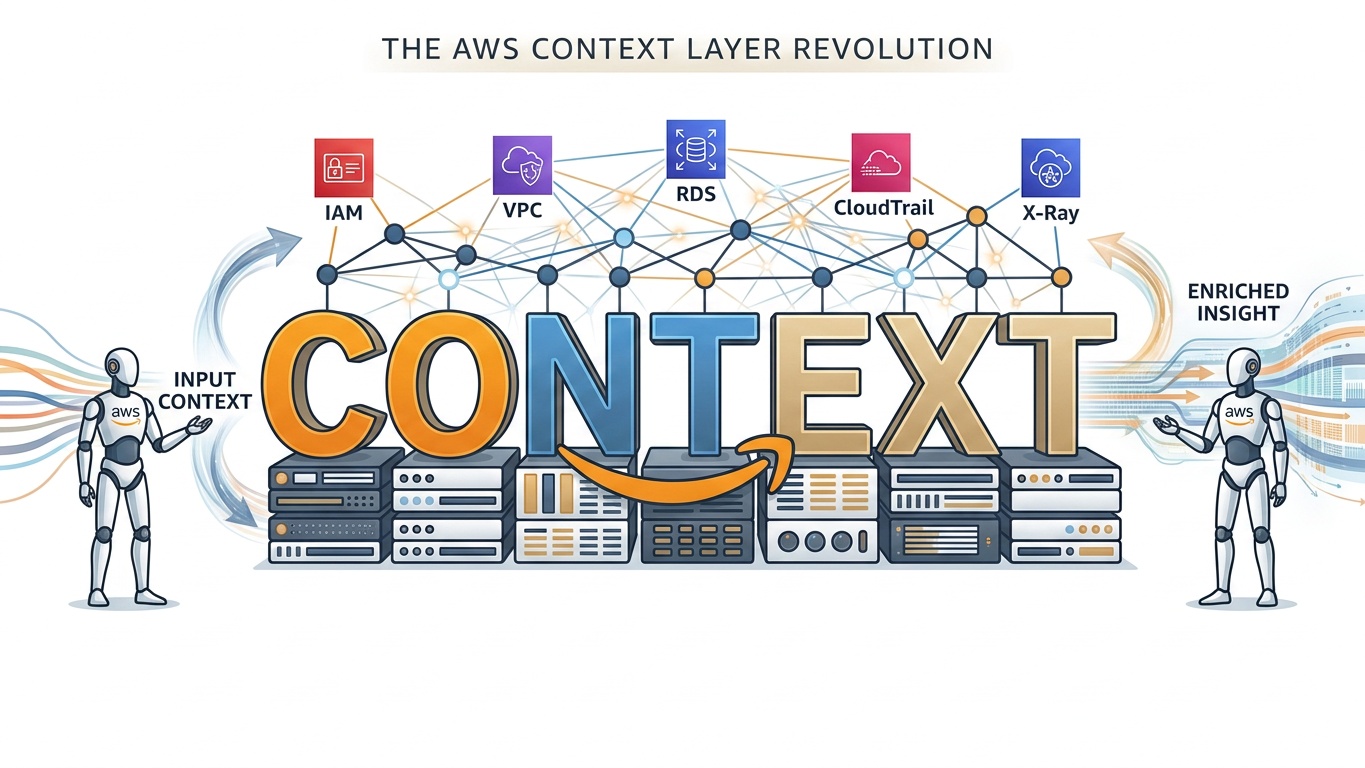
This is where Amazon Web Services (AWS) comes in, with its recent announcement of a series of three products positioned as a context intelligence stack for AI agents. The centerpiece of this stack is AWS Context, a new knowledge graph service that gets smarter through agent usage over time.
The context layer plays a vital role in enabling AI systems to understand the relationships between different data entities, and to make informed decisions based on that understanding. By automating the process of building and maintaining the context layer, AWS is aiming to simplify the development and deployment of AI applications.
Furthermore, the context layer is not just limited to AI applications. It can also be used to improve data governance, data quality, and data discovery. By providing a standardized and automated way of building and maintaining the context layer, AWS is opening up new possibilities for organizations to leverage their data assets.
AWS Context: A Game-Changer
AWS Context is a knowledge graph service that automatically builds a graph from existing data, inferring relationships across datasets and business rules. This service is a significant departure from traditional context layer solutions, which rely on manual curation and re-curation.
According to Swami Sivasubramanian, vice president of Agentic AI at AWS, "Your agents now get smarter without you having to rebuild anything from scratch. This service automatically builds a knowledge graph from all your existing data."
The automated nature of AWS Context means that organizations can quickly and easily build and deploy AI applications, without the need for extensive manual curation. This can significantly reduce the time and cost associated with developing and deploying AI applications.
In addition, AWS Context can also learn from agent usage over time, allowing it to improve its accuracy and effectiveness. This means that the more an organization uses AWS Context, the more accurate and effective it becomes.
Key Features of AWS Context
Some of the key features of AWS Context include:
- Automated knowledge graph building
- Inference of relationships across datasets and business rules
- Learning from agent usage over time
- Integration with Amazon S3 Annotations and AWS Glue Data Catalog
These features make AWS Context a powerful tool for organizations looking to build and deploy AI applications. The automated knowledge graph building feature, for example, can save organizations a significant amount of time and effort.
The inference of relationships across datasets and business rules feature can also help organizations to identify new insights and patterns in their data. This can be particularly useful for organizations that are looking to improve their data governance and data quality.
Impact on the Context Layer Market
The introduction of AWS Context is set to disrupt the context layer market, which is currently contested by various vendors. AWS is entering this market with a different architectural premise: that the graph should learn from how agents use it automatically, without human re-curation.
This approach has the potential to simplify the process of building and maintaining context layers, making it more accessible to a wider range of organizations. As the market continues to evolve, it will be interesting to see how AWS Context stacks up against other solutions.
The context layer market is a rapidly evolving space, with new vendors and solutions emerging all the time. However, AWS Context is well-positioned to make a significant impact in this market, given its automated and learning-based approach.
In addition, the fact that AWS Context is part of a larger context intelligence stack for AI agents means that it can be easily integrated with other AWS services. This can make it easier for organizations to build and deploy AI applications, and to leverage the power of the context layer.
Real-World Applications of AWS Context
AWS Context has a wide range of real-world applications, from improving customer service to enhancing supply chain management. By providing a standardized and automated way of building and maintaining the context layer, AWS Context can help organizations to unlock new insights and patterns in their data.
For example, a retail organization could use AWS Context to build a knowledge graph of its customers, including their purchase history, browsing behavior, and demographic information. This could help the organization to personalize its marketing and customer service efforts, and to improve customer satisfaction.
In addition, a healthcare organization could use AWS Context to build a knowledge graph of patient data, including medical history, treatment outcomes, and genomic information. This could help the organization to identify new insights and patterns in patient data, and to develop more effective treatment plans.
Conclusion
In conclusion, AWS Context is a game-changing service that has the potential to simplify the process of building and maintaining context layers. By automating the process of building and maintaining the context layer, AWS Context can help organizations to unlock new insights and patterns in their data, and to develop more effective AI applications.
As the context layer market continues to evolve, it will be interesting to see how AWS Context stacks up against other solutions. However, given its automated and learning-based approach, AWS Context is well-positioned to make a significant impact in this market.
Attribution: This article is based on a report by VentureBeat, "AWS enters the context layer race with a graph that learns from agents, not manual curation".
Originally reported by venturebeat.com. Read the original article.