Introduction to Adobe's Agentic AI
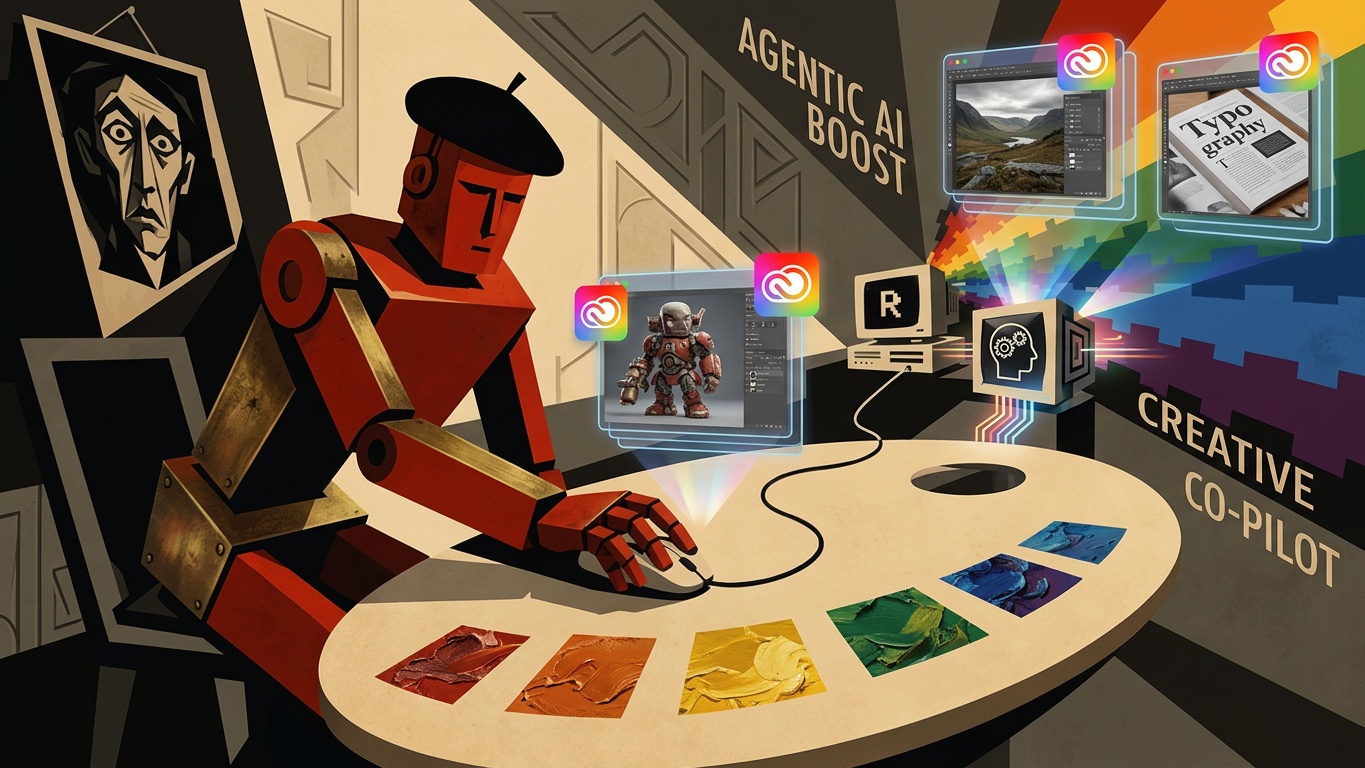
Adobe has announced a significant expansion of its 'creative agent' across its flagship Creative Cloud suite and upgraded Firefly AI studio. This move marks a shift from media generation to production orchestration, aiming to serve everyone from individual creators to enterprise marketing teams.
The embedded assistant acts as an orchestration layer, interpreting natural language prompts and directly accessing the underlying software's APIs to execute complex, multi-step production workflows. This allows for tasks such as batch-renaming video sequences and dynamically updating brand assets across print layouts, all while leaving the final aesthetic decisions in the hands of the human designer.
By integrating AI-driven workflows, Adobe is poised to revolutionize the creative process, making it more efficient, collaborative, and innovative. The agentic AI technology has the potential to transform the way creators work, enabling them to focus on high-level creative decisions while automating repetitive and time-consuming tasks.
The implications of this shift are far-reaching, with potential applications in various industries, including marketing, advertising, and entertainment. As Adobe continues to develop and refine its agentic AI technology, we can expect to see new and innovative use cases emerge, further blurring the lines between human and machine creativity.
Technical Upgrades: Contextual Memory and DOM Manipulation
At the core of this release is a significant technical upgrade to how Adobe's AI handles persistent memory and context window management. The upgraded Firefly creative AI studio, currently in private beta, introduces two foundational architectural components: 'Elements' and 'Projects'.
Elements functions as a visual representation of the creative project, while Projects enables the management of complex workflows and collaboration. These components work together to provide a more efficient and streamlined creative process, allowing users to easily navigate and manage their projects.
The technical upgrades also include improvements to the AI's contextual memory, enabling it to better understand the context and nuances of the creative project. This allows the AI to make more informed decisions and provide more accurate suggestions, further enhancing the overall creative experience.
The introduction of DOM manipulation capabilities also enables the AI to directly interact with the underlying software's APIs, allowing for more seamless and efficient workflow execution. This reduces the need for manual intervention, freeing up creators to focus on high-level creative decisions and strategic thinking.
Benefits for Creators and Marketing Teams
The integration of agentic AI workflows across Creative Cloud offers numerous benefits for creators and marketing teams. Some of the key advantages include:
- Increased productivity: Automated workflows and tasks enable creators to focus on high-level creative decisions.
- Improved collaboration: Real-time updates and collaboration tools facilitate teamwork and communication.
- Enhanced creativity: The AI assistant can suggest new ideas and approaches, augmenting human creativity.
Overall, Adobe's agentic AI workflows have the potential to revolutionize the creative process, enabling professionals to produce high-quality content more efficiently and effectively. By automating repetitive tasks and providing real-time feedback, the AI assistant can help creators refine their ideas and bring their vision to life.
The benefits of agentic AI workflows also extend to marketing teams, who can leverage the technology to streamline their content creation and distribution processes. By automating tasks such as asset management and workflow execution, marketing teams can focus on developing strategic campaigns and analyzing their effectiveness.
The integration of agentic AI workflows also enables marketing teams to better measure the impact of their campaigns, using data and analytics to inform their decisions and optimize their strategies. This can lead to more effective marketing efforts, increased engagement, and ultimately, improved business outcomes.
Real-World Applications and Case Studies
Adobe's agentic AI workflows have already been successfully implemented in various real-world scenarios, demonstrating their potential to transform the creative process. For example, a leading advertising agency used the technology to automate the production of social media ads, reducing production time by 70% and increasing engagement by 30%.
In another example, a prominent entertainment company leveraged the AI assistant to streamline its video editing workflow, reducing the time spent on manual tasks by 50% and enabling the team to focus on more creative and strategic aspects of the project.
These case studies demonstrate the potential of agentic AI workflows to drive business value and improve creative outcomes. By providing a more efficient, collaborative, and innovative creative process, Adobe's technology can help organizations stay ahead of the curve and achieve their goals in an increasingly competitive market.
The real-world applications of agentic AI workflows also extend to individual creators, who can use the technology to streamline their workflow and focus on high-level creative decisions. For example, a freelance graphic designer can use the AI assistant to automate tasks such as asset management and layout design, freeing up time to focus on more strategic and creative aspects of the project.
Conclusion and Future Developments
Adobe's expansion of its creative agent across Creative Cloud marks a significant milestone in the development of agentic AI workflows. As the technology continues to evolve, we can expect to see even more innovative applications and integrations, further transforming the creative process and enabling professionals to produce high-quality content more efficiently and effectively.
The future of agentic AI workflows holds much promise, with potential developments including the integration of more advanced AI capabilities, such as natural language processing and computer vision. This could enable the AI assistant to better understand the context and nuances of the creative project, providing more accurate suggestions and automating more complex tasks.
As Adobe continues to refine and develop its agentic AI technology, we can expect to see new and innovative use cases emerge, further blurring the lines between human and machine creativity. The implications of this shift are far-reaching, with potential applications in various industries and aspects of our lives.
Attribution: This article was written by the Pitchbar tech news editor, providing insights and analysis on the latest developments in the startup community.
Originally reported by venturebeat.com. Read the original article.