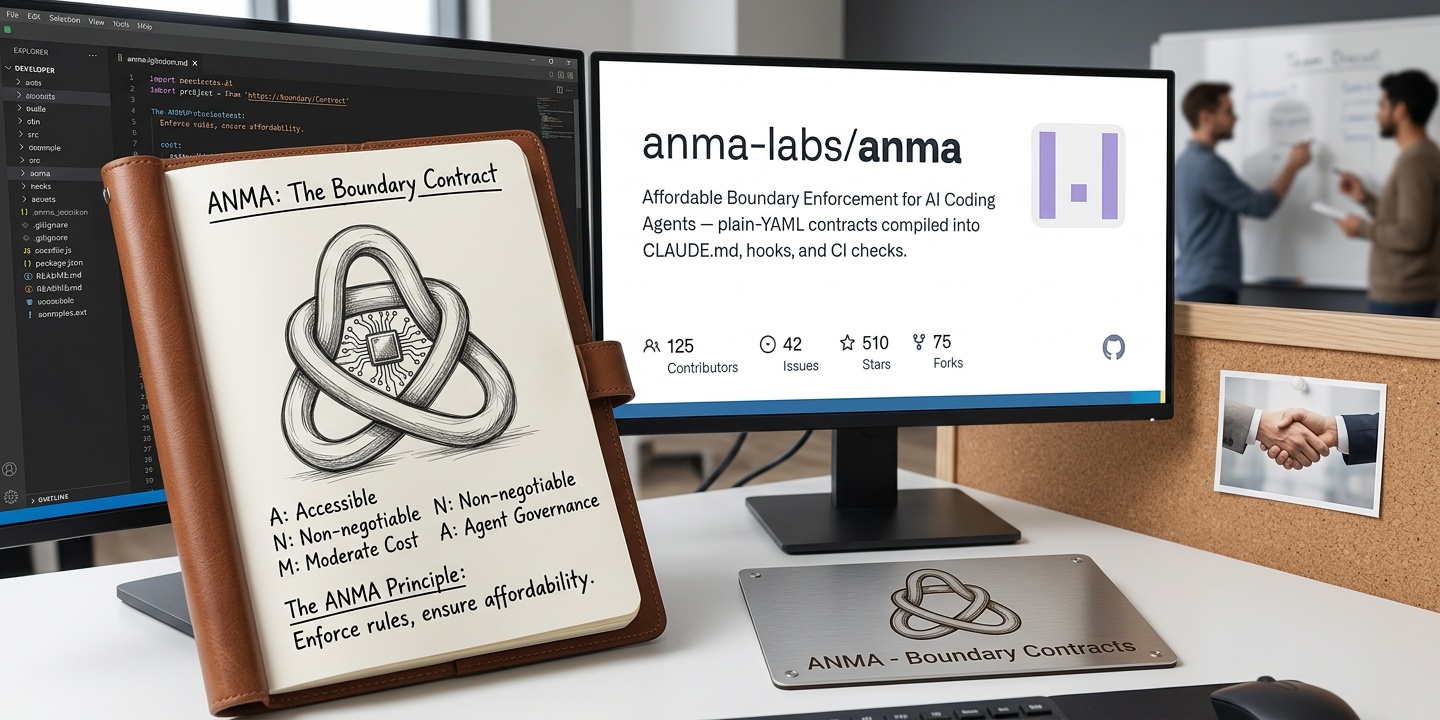
Introduction to ANMA
ANMA is a revolutionary approach to AI coding that introduces boundary contracts for cheaper models. The brainchild of a developer who noticed that cheaper models often ignored architecture rules, ANMA aims to change the game by ensuring that these models adhere to the rules.
The developer behind ANMA conducted several benchmarks using Claude Haiku 4.5, with and without ANMA. The results were astounding - without ANMA, the model ignored the rules 13 out of 19 runs, while with ANMA, it followed the rules 20 out of 20 runs.
These results demonstrate the potential of ANMA to improve the accuracy and reliability of cheaper AI models. By introducing boundary contracts, ANMA ensures that these models follow the architecture rules, resulting in higher-quality code and reduced development costs.
The implications of ANMA are significant, as it enables developers to use cheaper models without compromising on code quality. This can lead to faster development times, reduced costs, and increased innovation in the field of AI coding.
What is ANMA?
ANMA uses YAML contracts with CLAUDE.md, hooks, and CI checks to ensure that cheaper models follow the architecture rules. This innovative approach enables developers to use cheaper models without compromising on the quality of the code.
The question on everyone's mind is - would cheaper models with stronger rules be the best affordable default for coding? The answer lies in the fact that stronger, more expensive models already follow the architecture rules. ANMA's approach makes cheaper models a viable option by introducing boundary contracts that ensure adherence to these rules.
ANMA's use of YAML contracts provides a flexible and scalable solution for defining boundary contracts. This allows developers to easily integrate ANMA into their existing workflows and tools, making it a seamless addition to their development process.
The combination of YAML contracts, hooks, and CI checks provides a robust and reliable solution for ensuring that cheaper models follow the architecture rules. This comprehensive approach ensures that ANMA can handle a wide range of use cases and scenarios.
Benefits of ANMA
The benefits of ANMA are numerous. For one, it makes cheaper models a viable option for coding, reducing the cost of development. Additionally, ANMA's approach ensures that the code produced is of high quality, following the architecture rules that are essential for robust and maintainable software.
ANMA also enables developers to focus on the creative aspects of coding, rather than spending hours debugging and testing. With ANMA, developers can trust that their code will follow the rules, allowing them to concentrate on the logic and functionality of the software.
Furthermore, ANMA's approach can lead to increased innovation in the field of AI coding. By providing a reliable and cost-effective solution for cheaper models, ANMA enables developers to experiment with new ideas and approaches, leading to potential breakthroughs and advancements.
The cost savings provided by ANMA can also be significant, as developers can reduce their spending on more expensive models. This can lead to increased investment in other areas of development, such as research and development, or the hiring of additional talent.
Technical Details of ANMA
ANMA's technical implementation is based on a combination of YAML contracts, hooks, and CI checks. The YAML contracts define the boundary contracts that cheaper models must follow, while the hooks and CI checks ensure that these contracts are enforced.
The use of hooks provides a flexible solution for integrating ANMA into existing workflows and tools. This allows developers to easily customize and extend ANMA to meet their specific needs and requirements.
The CI checks provide an additional layer of validation, ensuring that cheaper models are adhering to the boundary contracts. This provides a high level of confidence in the quality and reliability of the code produced by these models.
ANMA's technical implementation is designed to be scalable and flexible, allowing it to handle a wide range of use cases and scenarios. This makes it an ideal solution for developers working on large-scale AI coding projects.
Real-World Applications of ANMA
ANMA has a wide range of potential applications in the field of AI coding. One potential use case is in the development of chatbots and virtual assistants, where cheaper models can be used to generate responses to user input.
Another potential use case is in the development of automated coding tools, where ANMA can be used to ensure that the generated code follows the architecture rules and is of high quality.
ANMA can also be used in the development of AI-powered games, where cheaper models can be used to generate game content, such as levels or characters.
The use of ANMA in these applications can lead to significant cost savings and increased innovation, as developers can focus on the creative aspects of coding, rather than spending hours debugging and testing.
Conclusion
ANMA is a game-changer in the world of AI coding. Its innovative approach to boundary contracts enables cheaper models to follow architecture rules, making them a viable option for coding. With ANMA, developers can reduce costs, improve code quality, and focus on the creative aspects of coding.
The potential applications of ANMA are vast, and its impact on the field of AI coding is likely to be significant. As the technology continues to evolve and improve, we can expect to see even more innovative solutions and applications emerge.
Attribution: This article is based on the original post on HN, Show HN: ANMA, boundary contracts for cheaper AI coding agents, and the ANMA project on GitHub, https://github.com/anma-labs/anma
Originally reported by hnrss.org. Read the original article.