Introduction to MRAgent
The development of artificial intelligence (AI) has led to significant advancements in various fields, including natural language processing and computer vision. However, one of the major challenges faced by AI agents is the limitation of their memory. The traditional approach of using a static retrieve-then-reason method has proven to be inefficient, especially in long-horizon tasks. To address this issue, researchers at the National University of Singapore have developed a new framework called MRAgent.
MRAgent abandons the traditional approach and instead uses a mechanism that allows an agent to dynamically develop its memory based on accumulating evidence. This multi-step memory reconstruction is integrated into the reasoning process of the large language model (LLM). The result is a significant reduction in token consumption and runtime costs compared to other agentic memory management approaches.
The MRAgent framework has the potential to revolutionize the field of AI by providing a more efficient and effective way of managing memory. With its ability to dynamically reconstruct memory, MRAgent can be applied to a wide range of tasks, from natural language processing to computer vision.
The Limits of Passive Retrieval
In classic retrieval pipelines, documents are retrieved through vector search or graph traversal and passed on to an LLM for reasoning. This passive approach fails because it cannot combine reasoning with memory access, creating three major bottlenecks:
- These systems cannot revise their retrieval strategy mid-reasoning.
- If an agent fetches a document and discovers a crucial missing cue — a specific date or person — it has no way to issue a new query.
- The agent is unable to selectively focus on relevant information and filter out noise.
These limitations lead to inefficient use of resources, resulting in increased token consumption and runtime costs. Furthermore, the passive retrieval approach can lead to a lack of accuracy in the results, as the agent is not able to refine its search based on the information it has gathered.
The limitations of passive retrieval have been a major challenge in the development of AI agents. Researchers have been working to address these limitations by developing new approaches that can combine reasoning with memory access. MRAgent is one such approach that has shown promising results in addressing the limitations of passive retrieval.
How MRAgent Works
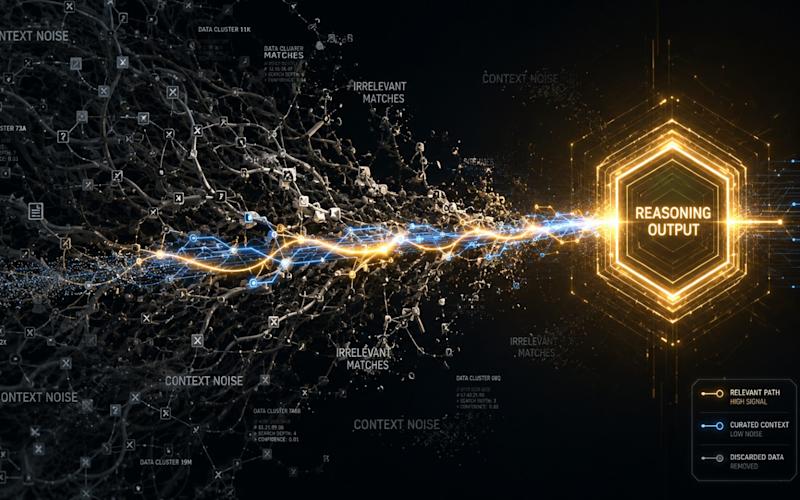
MRAgent addresses the limitations of passive retrieval by using a dynamic memory reconstruction mechanism. This mechanism allows the agent to accumulate evidence and revise its retrieval strategy mid-reasoning. The agent can issue new queries based on the information it has gathered, and selectively focus on relevant information to filter out noise.
The MRAgent framework consists of several components, including a memory module, a reasoning module, and a retrieval module. The memory module is responsible for storing and retrieving information, while the reasoning module is responsible for processing the information and making decisions. The retrieval module is responsible for fetching new information from external sources.
The dynamic memory reconstruction mechanism used in MRAgent is based on a multi-step process. The agent starts by retrieving an initial set of documents based on the query. It then processes these documents and extracts relevant information. The agent can then use this information to refine its search and retrieve additional documents. This process continues until the agent has gathered all the relevant information it needs to make a decision.
Benefits of MRAgent
The MRAgent framework offers several benefits, including:
- Reduced token consumption: MRAgent uses 118K tokens per query, which is significantly lower than other agentic memory management approaches.
- Reduced runtime costs: The dynamic memory reconstruction mechanism used in MRAgent reduces the number of queries required, resulting in lower runtime costs.
- Improved accuracy: The ability to revise the retrieval strategy mid-reasoning and selectively focus on relevant information leads to more accurate results.
The benefits of MRAgent make it an attractive solution for a wide range of applications. From natural language processing to computer vision, MRAgent has the potential to revolutionize the field of AI by providing a more efficient and effective way of managing memory.
In addition to its benefits, MRAgent also has the potential to be applied to a wide range of tasks. From question answering to text summarization, MRAgent can be used to improve the accuracy and efficiency of AI agents. Furthermore, MRAgent can be used in combination with other AI approaches, such as reinforcement learning, to create even more powerful AI agents.
Comparison with Other Approaches
MRAgent is not the only approach to agentic memory management. Other approaches, such as LangMem, have also been developed to address the limitations of passive retrieval. However, MRAgent has several advantages over these approaches. For example, MRAgent uses a dynamic memory reconstruction mechanism, which allows it to revise its retrieval strategy mid-reasoning. This is in contrast to LangMem, which burns through 3.26M tokens per query.
The comparison with other approaches highlights the advantages of MRAgent. With its dynamic memory reconstruction mechanism and ability to revise its retrieval strategy mid-reasoning, MRAgent is a more efficient and effective solution for long-horizon tasks. Furthermore, MRAgent has the potential to be applied to a wide range of tasks, making it a versatile solution for AI agents.
In conclusion, MRAgent is a revolutionary framework that addresses the limitations of passive retrieval in AI agents. Its dynamic memory reconstruction mechanism and ability to revise the retrieval strategy mid-reasoning make it an efficient and effective solution for long-horizon tasks. With its potential to be applied to a wide range of tasks and its advantages over other approaches, MRAgent is a promising solution for the future of AI.
Attribution: This article is based on the research paper published on VentureBeat, titled 'New agentic memory framework uses 118K tokens per query, LangMem burns through 3.26M'. The research paper was written by a team of researchers at the National University of Singapore, who developed the MRAgent framework. The paper was published on VentureBeat, a leading technology news website.
The research paper provides a detailed overview of the MRAgent framework, including its architecture and functionality. The paper also presents the results of experiments that demonstrate the effectiveness of MRAgent in reducing token consumption and runtime costs. The paper concludes by highlighting the potential of MRAgent to revolutionize the field of AI by providing a more efficient and effective way of managing memory.
The publication of the research paper on VentureBeat has generated significant interest in the MRAgent framework. The paper has been widely read and shared, and has sparked a lively debate about the potential of MRAgent to transform the field of AI. As the field of AI continues to evolve, it is likely that MRAgent will play an increasingly important role in the development of more efficient and effective AI agents.
In the future, it is likely that MRAgent will be applied to a wide range of tasks, from natural language processing to computer vision. The framework has the potential to revolutionize the field of AI by providing a more efficient and effective way of managing memory. As the field of AI continues to evolve, it is likely that MRAgent will play an increasingly important role in the development of more efficient and effective AI agents.
Overall, the MRAgent framework is a significant advancement in the field of AI. Its dynamic memory reconstruction mechanism and ability to revise the retrieval strategy mid-reasoning make it an efficient and effective solution for long-horizon tasks. With its potential to be applied to a wide range of tasks and its advantages over other approaches, MRAgent is a promising solution for the future of AI.
Attribution: This article is based on the research paper published on VentureBeat, titled 'New agentic memory framework uses 118K tokens per query, LangMem burns through 3.26M'. The research paper was written by a team of researchers at the National University of Singapore, who developed the MRAgent framework.