Introduction to Orbital Data Centers
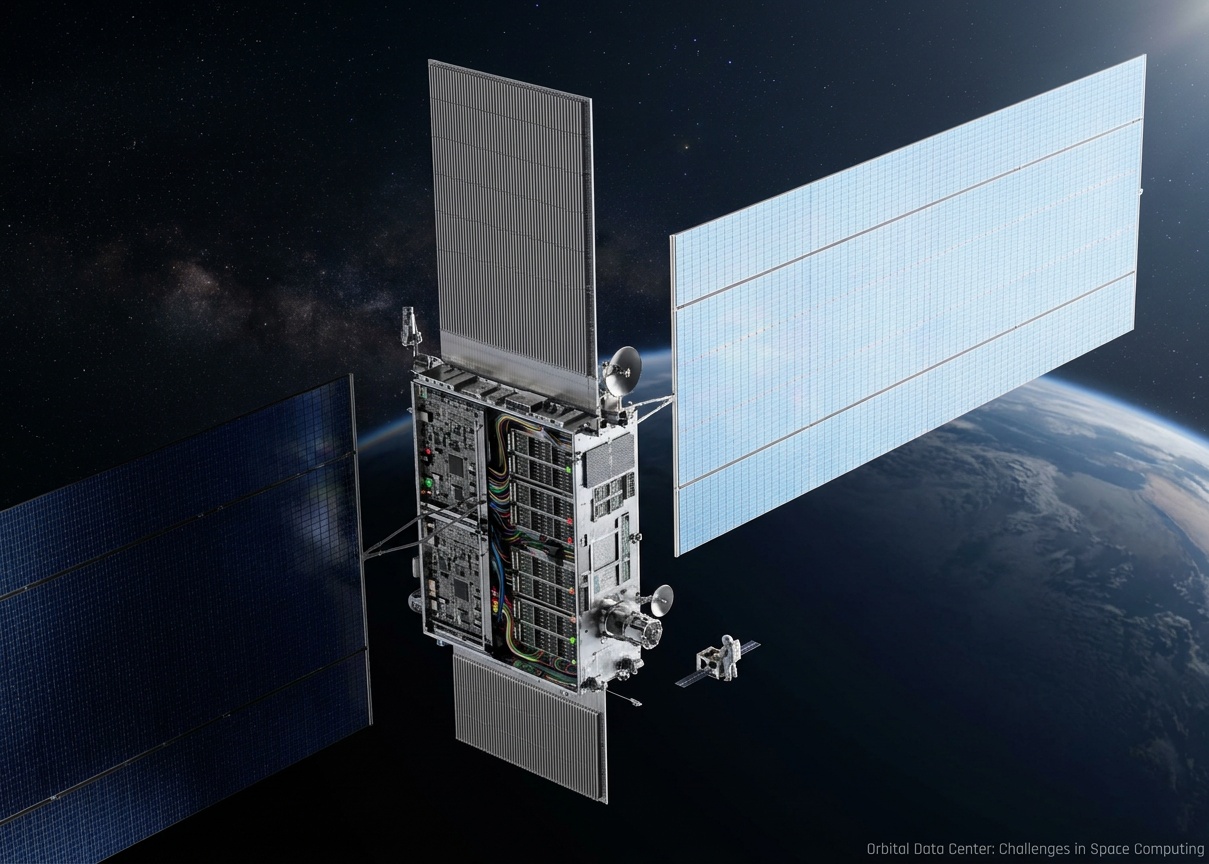
Orbital data centers have been a topic of interest in recent years, with their potential to revolutionize the way we process and store data. However, as appealing as the concept may seem, the reality of operating such facilities in space is far more complex.
The idea of launching satellites and operating them as data centers is theoretically sound, but the execution is where the challenges begin. For instance, the harsh environment of space, with its extreme temperatures and radiation, poses significant risks to the electronic equipment necessary for data processing and storage.
Moreover, the concept of orbital data centers is not just about launching a few satellites into space. It requires a comprehensive understanding of space technology, data processing, and storage. The development of such facilities would need to involve collaboration between experts from various fields, including aerospace engineering, computer science, and materials science.
The potential benefits of orbital data centers are numerous. They could provide a secure and reliable way to store and process sensitive data, reducing the risk of cyberattacks and data breaches. Additionally, they could enable the creation of a global network of interconnected data centers, facilitating the exchange of information and promoting international collaboration.
Challenges in Space Computing
One of the primary challenges faced by orbital data centers is the issue of heat dissipation. In space, there is no air to provide the necessary cooling for electronic equipment, which can lead to overheating and system failure. This problem is further compounded by the fact that the equipment used in these data centers is highly sensitive and requires precise temperature control to function efficiently.
Another significant challenge is the issue of connectivity. Orbital data centers need to maintain constant and reliable communication with Earth to be effective. However, the distance between the Earth and the orbiting data center, combined with the limitations of current communication technology, makes real-time data transfer a daunting task.
The radiation environment in space also poses a significant threat to the electronic equipment used in orbital data centers. High-energy particles and cosmic rays can cause damage to the equipment, leading to malfunctions and system failures. This requires the development of specialized shielding and protection technologies to mitigate the effects of radiation.
Furthermore, the lack of gravity in space can also cause problems for the equipment used in orbital data centers. Many electronic components are designed to operate in a gravitational environment, and the absence of gravity can cause them to malfunction or fail. This requires the development of specialized equipment that can operate effectively in a microgravity environment.
Infrastructure and Maintenance
The infrastructure required to support orbital data centers is also a significant concern. The facilities need to be designed to withstand the harsh conditions of space, including extreme temperatures, radiation, and debris. Moreover, the equipment used in these data centers must be highly reliable and fault-tolerant, as maintenance and repair in space are extremely difficult and costly.
Some of the key considerations for the infrastructure of orbital data centers include:
- Robust and reliable power supply systems
- Advanced cooling systems capable of operating in space
- High-gain antennae for efficient communication with Earth
- Redundant systems for critical components to ensure continuity of operations
The development of orbital data centers will also require the creation of new maintenance and repair technologies. This could include the use of robotic systems to perform routine maintenance tasks, as well as the development of advanced diagnostic tools to identify and repair faults.
In addition, the infrastructure of orbital data centers will need to be designed with scalability and flexibility in mind. As the demand for data storage and processing continues to grow, the facilities will need to be able to expand and adapt to meet the changing needs of users.
Security and Data Protection
Orbital data centers will also need to prioritize security and data protection. The facilities will need to be designed with multiple layers of security, including encryption, firewalls, and access controls, to prevent unauthorized access and protect sensitive data.
The use of advanced encryption technologies, such as quantum encryption, could provide an additional layer of security for data stored in orbital data centers. This could be particularly important for sensitive data, such as financial information or personal identifiable information.
Furthermore, the development of orbital data centers will need to involve collaboration with regulatory bodies and industry experts to establish clear guidelines and standards for data protection and security. This could include the development of new regulations and laws to govern the use of orbital data centers, as well as the creation of industry-wide standards for security and data protection.
Conclusion and Future Prospects
While the concept of orbital data centers is seductive on paper, the reality of operating them in space is fraught with challenges. From the harsh environment and connectivity issues to the complexities of infrastructure and maintenance, there are numerous hurdles to overcome.
However, as technology continues to evolve and innovation persists, it is possible that future advancements could mitigate some of these challenges, making orbital data centers a viable option for the future of computing. The development of new materials, technologies, and techniques could help to address the challenges associated with space computing, and the creation of orbital data centers could provide a new and innovative way to store and process data.
The potential benefits of orbital data centers are significant, and the development of such facilities could have a major impact on the way we store and process data. As the demand for data storage and processing continues to grow, the need for innovative solutions will become increasingly important, and orbital data centers could play a key role in meeting this demand.
Attribution: This article is based on information available from SingularityHub, with insights into the challenges and future prospects of orbital data centers.
Originally reported by singularityhub.com. Read the original article.